

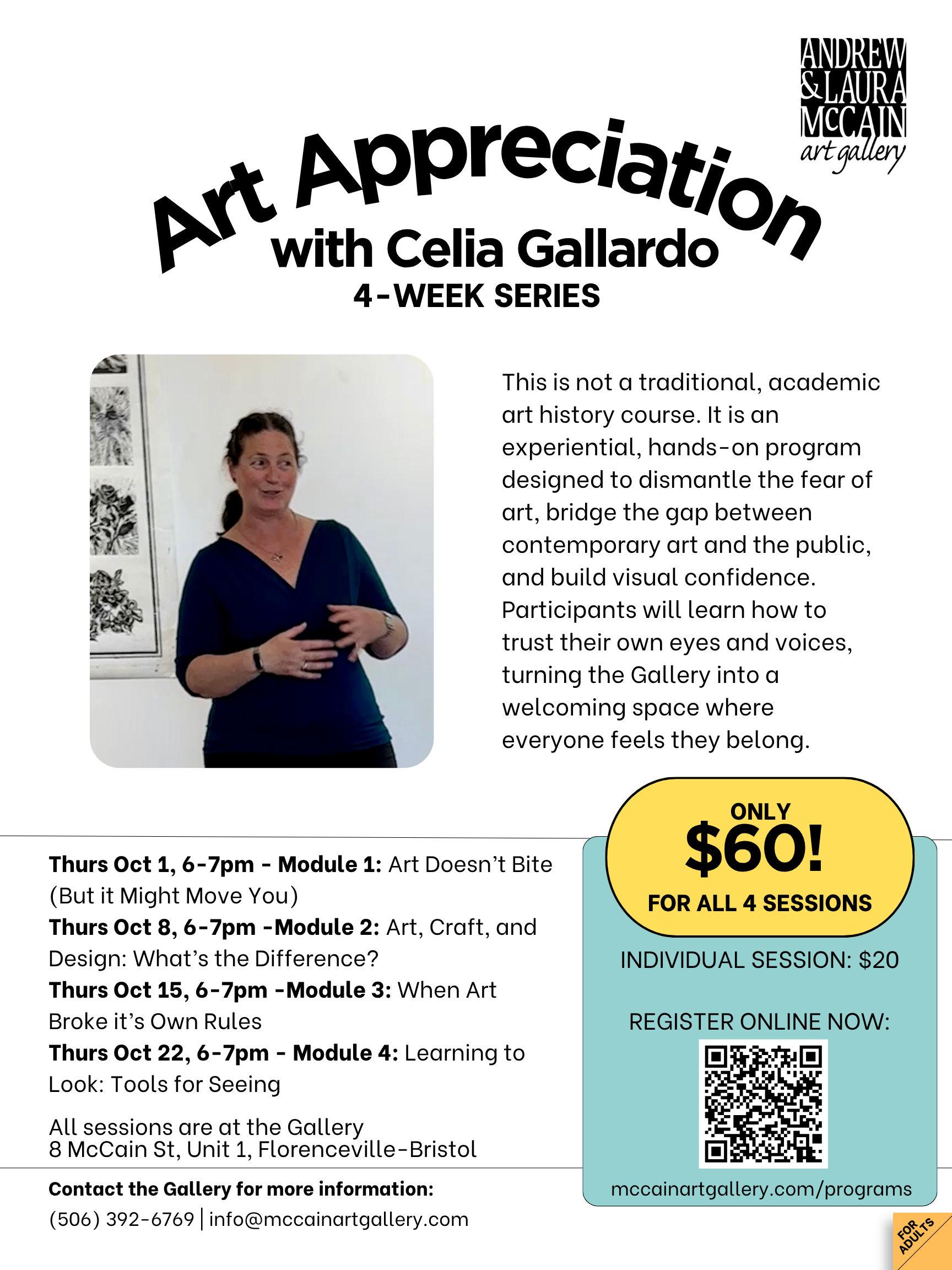
Art can sometimes feel intimidating – especially when you’re standing in a gallery wondering, “Am I looking at this the right way?”
This experiential, hands-on program invites participants to leave that question behind. Rather than focusing on memorizing artists, dates, or movements, we’ll explore how to look at art, respond to what we see, and develop confidence in our own interpretations.
Through conversation, observation, and engaging activities, participants will learn to trust their eyes, their instincts, and their voices. Together, we’ll break down the barriers that can make contemporary art feel inaccessible and discover how the Gallery can be a space for curiosity, connection, and conversation.
No art expertise required—just bring your perspective.
Target audience: Absolute beginners, museum-goers who want to deepen their experience, and anyone who has ever felt intimidated by art.
Module 1: Art Doesn’t Bite (But it might move you)
October 1, 6-7pm
Purpose: Break fear and dismantle common prejudices.
- “Anyone could do that” – art vs. technique.
- “It’s ugly” – beauty beyond pretty; finding aesthetics in the raw, the difficult, or the ordinary.
- “Art is useless” – meaning vs. function and the layers of human experience.
- The myth of elitism: how are became a space for the “enlightened” and how to reclaim it.
Module 2: Art, Craft, and Design: What’s the Difference?
October 8, 6-7pm
Purpose: Understand intention, authorship, and meaning without rigid boundaries.
- Art vs. craft vs. hobby
- Art vs. design: close relatives, not twins.
- Technique vs. concept: when meaning outpaces craftsmanship.
- Hybrid practices in the 21st century: exploring where the lines blur
Module 3: When Art Broke it’s own Rules
October 15, 6-7pm
Purpose: Give historical context to modern discomfort and radical changes
- From Renaissance harmony to modern discomfort and radical changes
- Duchamp and the shift from the physical object to the idea
- Conceptual art, performance, and provocation.
- What art changes – and why it still unsettles us.
Module 4: Learning to Look: Tools for Seeing
October 22, 6-7pm
Purpose: Provide practical, material, and visual tools for deep observation.
- The visual language: colour, form, rhythm, and composition.
- Materials and texture: what the physical material communicates without words.
- Context: how time, place, and the artist’s life alter meaning
- Emotional vs. formal reading